Empowering lives through
knowledge and compassion
Parkinson’s MDcare promotes
early diagnosis and supports those
affected by Parkinson’s.
Together, we bring hope and understanding to millions.
- 20+ Years of Parkinson’s (PD) Treatment Experience
- Advanced Deep Brain Stimulation (DBS) for Parkinson’s Disease (PD)
- Personalized Care for Every Stage of Parkinson’s Disease (PD)
- International Protocols for Parkinson’s Treatment
- Comprehensive Management: Medication, Lifestyle, Exercise, and Deep Brain Stimulation (DBS)
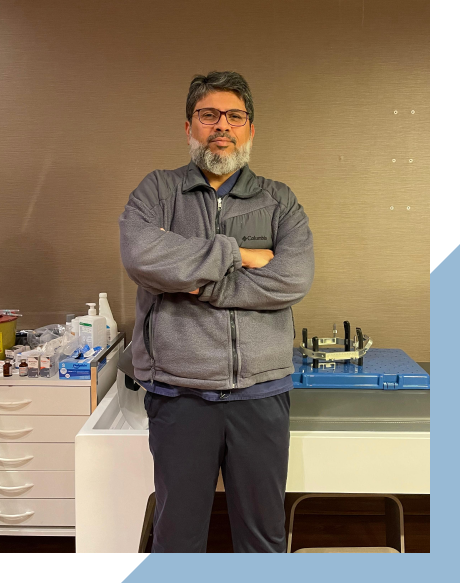
About Dr. Jawad A. Bajwa
Interventional Movement Disorders Neurologist
& Parkinson’s (PD) Specialist
Dr. Jawad A. Bajwa is a well-recognized Interventional Movement Disorders (MDs) Neurologist with over 20 years of experience, specializing in Deep Brain Stimulation (DBS), Parkinson’s disease (PD) and Movement Disorders (MDs). He was trained in the United States at the prestigious Georgetown University Hospital and the Cleveland Clinic Foundation and has extensive clinical skills as well as a deep understanding of the cultures of the Middle East, North Africa and South Asia (MENASA) region.
He is a leading expert in managing Parkinson’s disease (PD), dystonia, and essential tremor (ET), having worked in the United States, the Middle East, Pakistan, and many other countries. Dr. Bajwa is recognized for his clinical excellence, academic leadership, and contributions to neurological movement disorders (MDs) research. He continues to improve Parkinson’s disease (PD) treatment by advancing clinical ideas, training, and always prioritizing patient care.
Understanding
Parkinson’s disease (PD)
Parkinson’s disease (PD) is a neurodegenerative disorder that impairs coordination and motor control. Dopamine is a chemical messenger required for smooth and coordinated muscle action. It occurs when nerve cells in the substantia nigra, a part of the brain, become damaged or die. The steady depletion of dopamine causes Parkinson’s disease (PD) typical symptoms, such as tremors, bradykinesia (slowed movement), rigidity, and balance problems.
Although cases may begin earlier, the disease typically presents around the age of 50 or later. Genetic changes account for about 10-20% of cases, while the vast majority are idiopathic. Environmental contaminants and aging could all be contributory factors.
This disorder worsens over time, beginning with mild tremors, stiffness, and slowness and progressing to advanced stages where daily chores become more difficult. Along with motor symptoms, persons with this disorder commonly experience non-motor symptoms such as difficulty sleeping, constipation, fatigue, and problems with fine motor tasks. Some of these symptoms can occur years before mobility issues develop.
There is currently no cure, although drugs, lifestyle changes, exercise and Deep Brain Stimulation (DBS) can help manage symptoms and improve quality of life. Early diagnosis and continuing care are critical for maintaining autonomy and minimising disease burden.
When Should You
See Dr. Bajwa for Parkinson’s
Disease (PD)?
Getting in touch with a Parkinson’s disease (PD) expert like Dr. Jawad A. Bajwa early on can make a big difference in how well you manage Parkinson’s disease (PD). Recognizing symptoms early leads to a correct diagnosis, prompt treatment, and a better quality of life. If you or someone you care about has any of the following indicators, it’s time to see a doctor for an examination and treatment.
You Should See Dr. Bajwa If:
- You notice tremors or shaking in your hands, arms, or legs.
- You experience stiffness or rigidity in your muscles.
- Your movements have slowed down, or daily tasks take longer (bradykinesia).
- You have balance issues or experience frequent falls.
- There are changes in your walking pattern, such as shuffling or dragging your feet.
- Your speech becomes softer, slurred, or monotone.
- You notice reduced facial expressions or a “mask-like” appearance.
- You find fine motor tasks (like writing or buttoning clothes) increasingly difficult.
- Your current medications are not effectively controlling symptoms.
- You want to explore advanced treatments such as Deep Brain Stimulation (DBS).
Parkinson’s Disease
(PD) Symptom Checker
It’s crucial to pay attention if you notice differences in how you move or coordinate. This is because Parkinson’s disease (PD) frequently starts off slowly, and catching it early can make treatment far more effective. Here are some important signs to look out for:
Common Symptoms:
- Tremors or shaking in hands, arms, or legs
- Muscle stiffness or rigidity
- Slowed movements (bradykinesia)
- Balance problems or frequent falls
- Changes in speech (soft, slurred, or monotone)
- Reduced facial expression (mask-like face)
- Small or shaky handwriting
How to Diagnose If You Might
Have Parkinson’s Disease (PD)?
There is no one test that can tell if someone has Parkinson’s disease (PD). Instead, Movement Disorders (MDs) neurologists look at symptoms and medical history to make a diagnosis. To confirm the condition and rule out other possible reasons, your movement disorders neurologist may suggest the following:
Diagnosis May Include:
- Neurological assessment and symptom review
- Medical history assessment
- MRI or CT scans
- Blood tests to exclude other conditions
- Genetic testing (in select cases)
Early diagnosis ensures timely treatment and better symptom management.
Life After interventional Deep
Brain Stimulation (DBS) Therapy for
Parkinson’s (PD) What to Expect
Patients experience significant improvements in their movement control, tremor reduction, and overall quality of life after Deep Brain Stimulation (DBS). The procedure helps reduce motor irregularities, which makes daily tasks go more smoothly and consistently with fewer adverse effects from medications. A lot of people are able to do things on their own again and feel better physically and emotionally.
Following interventional DBS therapy, it is crucial to schedule regular follow-up appointments to adjust the device settings, monitor progress, and ensure the drugs are synchronizing with treatment. A healthy diet, moderate exercise, and physical therapy can all help you gain the most benefits from this approach. After this, people with Parkinson’s disease (PD) can feel more confident, stable, and hopeful, provided they get the right care and follow-up with a trained and experienced global team.
Parkinson’s Disease (PD): Timely vs. Delayed Treatment
Getting therapy for Parkinson’s disease (PD) on time can have a big impact on how the disease is managed, how well therapies function, and overall quality of life. Here’s a side-by-side look at the main differences between getting care early and getting care later.
| Aspect | Treated Timely | Not Treated Timely |
|---|---|---|
| Symptom Control & Motor Function | Tremors, stiffness, and slowness are effectively managed. | Symptoms worsen, affecting balance and coordination. |
| Medicine Response | Medications work efficiently with fewer side effects. | Response weakens; frequent adjustments are required. |
| Eligibility for Deep Brain Stimulation (DBS) | Higher success rates and better outcomes. | Limited eligibility due to advanced disease stage and age. |
| Speech & Swallowing | Easier to maintain with early speech therapy. | Increased risk of speech difficulty and swallowing problems. |
| Mental Health | Better emotional stability, confidence, and motivation. | Greater risk of depression, anxiety, and apathy. |
| Quality of Life | Improved independence, mobility, and daily functioning. | Decline in self-care, social engagement, and overall well-being. |
| Overall Prognosis | Stable, manageable condition with positive long-term outcomes. | Poor prognosis and limited treatment benefits. |
Parkinson’s Disease (PD) – Treatment Options
Dr. Jawad A. Bajwa’s treatment is based on a comprehensive, patient-centered strategy that includes medication and innovative device procedures. Each treatment plan is made to help with symptoms, limit the disease’s progress, and make life better in general. Treatment Options Include:
Interventional Treatments
Dr. Bajwa is an expert in Deep Brain Stimulation (DBS) therapy, which is a device that sends electrical impulses to specific parts of the brain. This greatly reduces tremors, stiffness, and involuntary movements. It helps with symptoms and makes motor function better.
Medication Management
Levodopa/Carbidopa (to raise dopamine levels), Dopamine Agonists (to mimic dopamine action), and COMT Inhibitors (to keep dopamine activity going) are the main ways to treat Parkinson’s symptoms. Dr. Bajwa customizes prescription programs to get the best results and the fewest adverse effects.
Exercise and Rehabilitation for Parkinson’s Disease (PD)
Alongside medical and interventional treatments, exercise and rehabilitation play a vital role in managing Parkinson’s disease (PD). Dr. Jawad A. Bajwa emphasizes a holistic approach that includes physical therapy, occupational therapy, and speech therapy to support movement, balance, and daily functioning.
Physical Therapy: Helps maintain mobility, flexibility, and strength. Targeted exercises improve posture, walking, and coordination, reducing the risk of falls.
Occupational Therapy: Focuses on practical strategies to make daily tasks—such as dressing, writing, and eating—easier and safer.
Speech and Swallowing Therapy: Addresses changes in voice, speech clarity, and swallowing difficulties that can occur as Parkinson’s progresses.
Regular Exercise: Activities like walking, cycling, and jogging have been shown to improve motor functions, balance, mood, and overall quality of life.
Dr. Bajwa’s holistic approach empowers patients to stay active, independent, and engaged in their daily lives,
complementing medical treatments for the best long-term outcomes.
What is Deep Brain Stimulation (DBS)?
Deep Brain Stimulation (DBS) is a safe and very effective interventional therapy for Parkinson’s disease (PD) that helps control tremors, stiffness, slowness, and walking. During the procedure, tiny electrodes are put into certain parts of the brain that control movement. These electrodes are attached to a tiny pulse generator that is put under the skin of the chest. This generator sends mild electrical signals to the brain to control abnormal activity. This helps movement become smoother and more controlled, and it cuts down on the need for high dosages of medicine. The Deep Brain Stimulation (DBS) device is programmable, giving patients long-term safety and flexibility.
Dr. Jawad A. Bajwa is an American-trained Interventional Movement Disorders Neurologist, Parkinson’s disease expert and Deep Brain Stimulation (DBS) Specialist. He has more than 20 years of experience managing DBS treatment for Parkinson’s disease (PD) with care and precision. He has helped many patients in the USA, the Middle East, and Pakistan enhance their mobility, independence, and quality of life in a life-changing way. Each patient gets a thorough evaluation, a personalized treatment plan, and continued assistance after the procedure to make sure they get the best results possible.
How is Interventional Deep Brain
Stimulation (DBS) Therapy Performed?
The Deep Brain Stimulation therapy is done with a lot of care and attention to detail to make sure it is safe and comfortable. It starts with precise brain imaging, such as MRI or CT scans, to find the exact parts of the brain that control movement. Using cutting-edge navigation technology and neurophysiological tools, ultra-thin electrodes are carefully placed in certain areas to help fix brain impulses that aren’t working right. These electrodes are linked to a small pulse generator that is put under the skin of the chest. The generator sends controlled electrical impulses to improve movement and reduce tremors.
Step-by-Step Overview:

Preparation &
Planning
Dr. Jawad A. Bajwa and his team start by using modern imaging techniques like MRI or CT scans, along with a stereotactic head frame, to find the exact parts of the brain that control movement.

Interventional Procedure
Fine electrodes are carefully inserted into the right parts of the brain with the help of computer-guided navigation and sophisticated brain neurophysiology. The procedure is done with either local or general anesthesia.

Device
Placement
A small pulse generator, which is like a pacemaker, is inserted beneath the skin of the chest and connects to these electrodes. The generator sends little electrical impulses to fix brain messages that are not normal.

Post-Procedure
Adjustment
After the procedure, the device settings are adjusted to provide the best results and lessen problems like tremors and stiffness.

Comprehensive
Follow-up Care
Regular follow-up visits, managing medications, programming DBS, and advising rehabilitation and exercise help people improve over time. This all-around approach often helps patients get their independence, confidence, and quality of life back.

Brain Map Understanding How Your Brain Works
The human brain is an intricate organ that regulates all of your bodily functions, including speech, emotions, memory, and movement. It is separated into a number of important areas, each of which is in charge of particular processes that support the body’s efficient operation. Patients and their families can better understand how diseases like Parkinson’s disease (PD) impact movement and coordination by being aware of these areas.
Key Areas of the Brain:
- Frontal Lobe: Manages thinking, decision-making, planning, and voluntary movement.
- Parietal Lobe: Processes touch, temperature, and spatial awareness.
- Temporal Lobe: Controls hearing, memory, and language comprehension.
- Occipital Lobe: Responsible for visual processing and interpretation.
- Cerebellum: Regulates balance, coordination, and fine motor control.
- Basal Ganglia: Plays a vital role in movement regulation; degeneration here is a major cause of Parkinson’s symptoms.
- Brainstem: Controls autonomic body functions like breathing and heart rate.
A visual brain map can be placed here to illustrate these regions, helping patients see how each area contributes to daily function and how targeted treatments can restore balance and control.
Disorders Treated by Dr. Jawad A. Bajwa
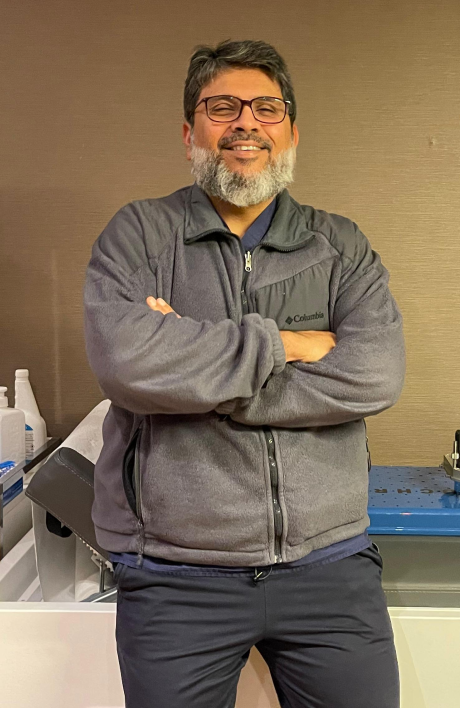
Dr. Jawad A. Bajwa
An interventional movement disorders (MDs) neurologist with training in the United States, focuses on diagnosing and treating complicated movement problems using cutting-edge methods like Deep Brain Stimulation (DBS). His method combines accuracy, empathy, and creativity to assist patients in regaining their freedom, mobility, and self-assurance in day-to-day activities.
Dystonia
Dr. Bajwa provides targeted therapy for dystonia patients, such as Deep Brain Stimulation (DBS), to
alleviate abnormal postures and uncontrollable muscle contractions. For people with dystonia, this therapy has demonstrated impressive effects in enhancing movement coordination and reducing discomfort.
Essential Tremor (ET)
Dr. Bajwa uses Deep Brain Stimulation (DBS), which stabilizes tremor-causing brain signals by delivering mild electrical impulses, to treat essential tremor (ET). This interventional treatment can significantly reduce tremors in the hands, head, or voice, giving patients more confidence and control over daily tasks.
Turning Disappointment Into Hope
We at ParkinsonsMDCare think that no one should have to deal with Parkinson’s disease (PD) and movement disorders (MDs) alone. With the correct attention, direction, and assistance, any obstacle can be overcome. We are assisting patients in converting doubt into strength and hope by using our knowledge, creativity, and compassion. This is the beginning of your path to a better, more self-sufficient existence, and we will accompany you every step of the way.
Frequently Asked Questions
What are the first signs of Parkinson’s Disease?
Subtle hand tremors, muscle stiffness, delayed motions, and little alterations in speech, handwriting, or facial expressions are frequently early indicators.
What are the main symptoms of Parkinson’s Disease?
Tremors, bradykinesia (slowness of movement), muscle rigidity, balance problems, and trouble walking or coordinating are common symptoms.
Is there a specific test or scan for Parkinson’s Disease?
It is a clinical diagnosis. Medical history and neurological assessment are used to make the diagnosis. The diagnosis may occasionally be supported by functional brain imaging.
How is Parkinson’s Disease treated?
Medication (including Levodopa/Carbidopa and Dopamine Agonists), lifestyle changes, holistic wellness, physical therapy, and deep brain stimulation (DBS) therapy are all part of the treatment.
Who is a good candidate for Interventional Deep Brain Stimulation therapy?
Deep Brain Stimulation (DBS) can be an excellent option for patients with Parkinson’s disease (PD) who have had the disease for a few years, have a bothersome tremor, have troublesome dyskinesia’s, have inconsistent drug response such as motor fluctuations or adverse drug reactions that limit the use of medications, overall suboptimal disease control and above all need to maintain a functional lifestyle, reduce disability and continue to enjoy a decent quality of life.
Are there risks or side effects of the Deep Brain Stimulation procedure?
Risks, including infection or transient adverse effects, are possible with any procedure. However, deep brain stimulation (DBS) is generally safe, well-tolerated, and provides a considerable long-term improvement in motor symptoms when supervised by a qualified deep brain stimulation (DBS) specialist like Dr. Jawad A. Bajwa and his team.